
The SAW 2026 Final Exhibition: A Celebration of Identity, Community, and Communication
Professor Ayobade’s “The Craft of Description”
Professor Castillo’s “Performance as a Way of Knowing”
About the Project
Groups create a 5-minute project that demonstrates how performance can produce knowledge. Each group selects a focus from one of the following areas.
Option 1: The Performance Score. A performance score is a short set of actions, gestures, movements, sounds, spoken words, pauses, or audience instructions. In this option, groups perform a score themselves or invite audiences to participate in a limited way, and they craft a score that’s clear enough for audiences to understand the question being explored. This option is suited to investigations of presence, repetition, the body, stillness, voice, spectatorship, or the relation between action and meaning.
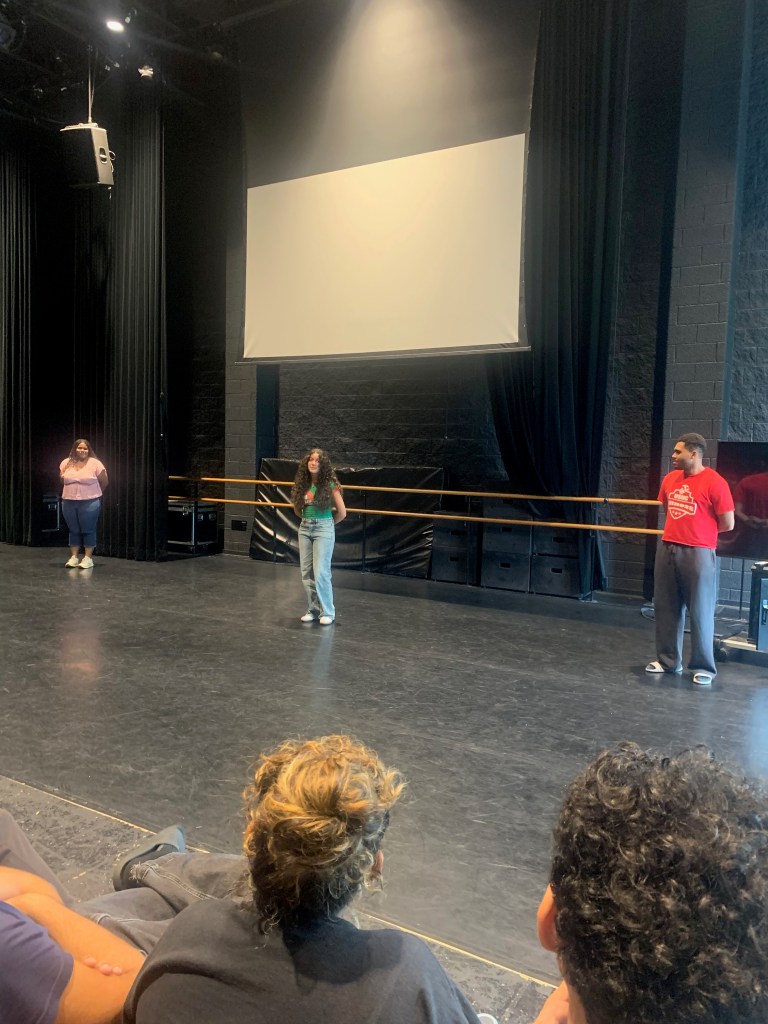
MaCayla Henderson, Madison Nieves, and Zavier Rivers Perform Sleeping Beauty
Option 2: The Everyday Life Analysis. An everyday life analysis presents a real scene through the lens of performance. Groups analyze a moment from campus life, social media, a classroom activity, the MCA visit, a public space, a routine, a gesture, a soundscape, or an interaction. They compose a performance that describes a scene clearly, identifies what makes it performative, and connects it to key performance studies concepts. Groups selecting this option investigate themes like self-presentation, audience, roles, attention, public behavior, institutions, and the ways ordinary life becomes meaningful through performance.
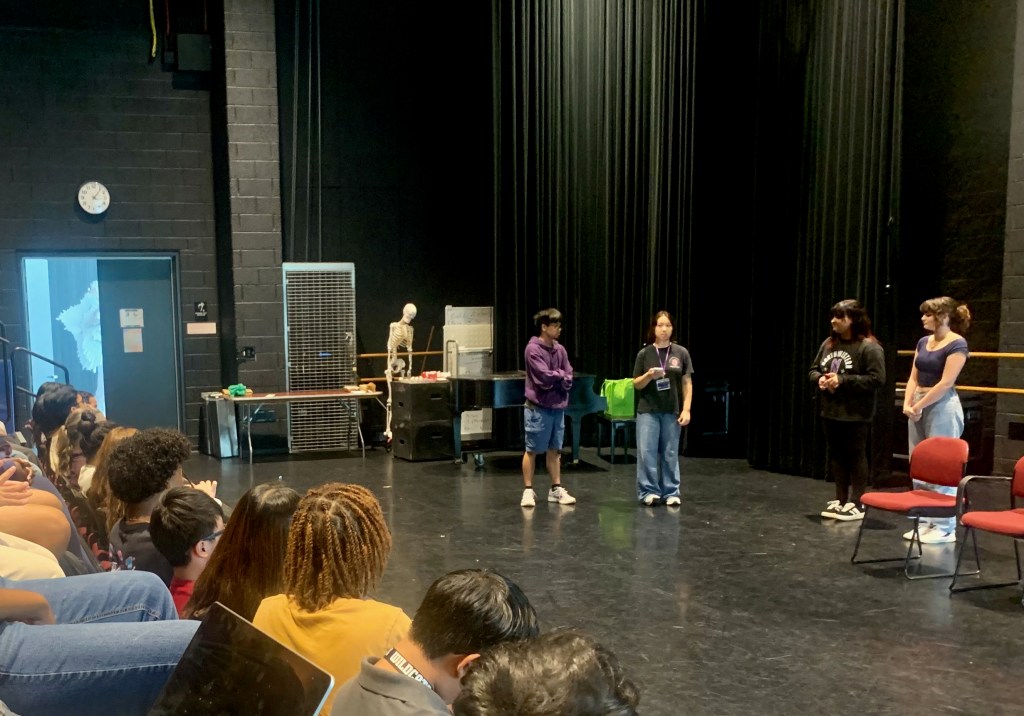
Farheen Abdullah, Jennifer Nguyen, Andrei Pacheco, and Diana Smith Perform First Meetings
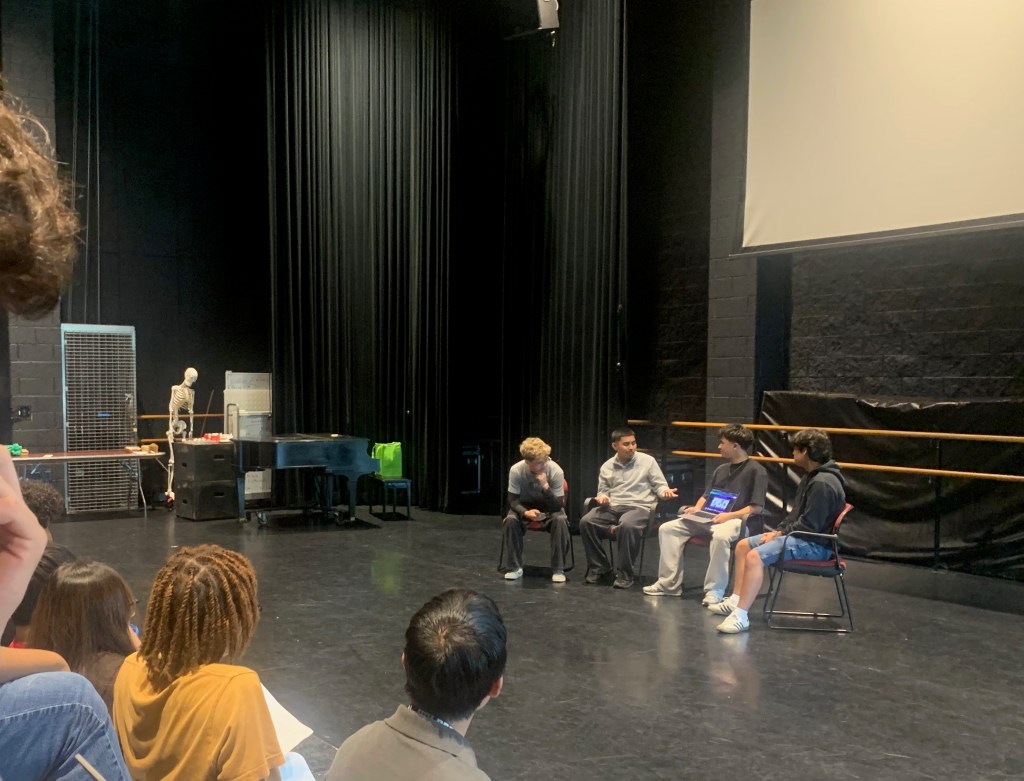
CJ Bauerdorf, Rodrigo Guzman, Daniel Navarrette, and Santos Pablo Jimenez Perform the Process of Group Work
Professor Dun’s “Who You Are (and How You Show It): Identity in Sport and Media”
About the Project
In CMN 100, student teams created a sport communication simulation based on a fictional or modified real-world controversy involving an athlete. Drawing on concepts such as identity, branding, impression management, fan engagement, and image repair, teams developed both a social media response strategy and a press conference.
The social media portion of the project required students to create original posts from the perspective of the athlete or the athlete’s media team. The posts were designed to respond strategically to the controversy while remaining consistent with the athlete’s brand and public identity. Students considered how different fan audiences might react, what messages would help protect or repair the athlete’s reputation, and how social media can be used as a tool for shaping public perception during a crisis.
The social media posts displayed here are one component of a larger communication strategy that also included a live press conference in which students role-played athletes, media managers, and journalists responding to the controversy in real time.
Juan Avila Sanchez and Bryan Rodriguez-Velazco
Safiyyah Haddi and Monica Travarez

